19/10/2026 10:34
One Tour Video, Two Languages: YouTube Titles and Descriptions for Cambodian Tour Operators

A useful cycling-tour video can still leave viewers uncertain before they press play. A Cambodian customer may need a Khmer explanation, while an English-reading visitor needs clear information about the route, meeting point and booking process. YouTube offers translated titles and descriptions for the same video, giving a tour operator a practical way to address both readers. The work requires more than replacing words: each version must describe the same experience accurately. This workflow shows how to prepare, publish and check those versions, and where an SMM-panel service should face a separate decision about purpose, evidence and platform rules.
1. Start with one booking question
Choose a video that answers a specific question people ask before booking. For a hypothetical Siem Reap cycling operator, that question might be: “What happens when we arrive for the morning ride?” The video shows the meeting area, bicycle fitting and departure briefing. This narrow subject gives both language versions a clear job. A general montage with no explanation is harder to describe usefully, because the translator must guess what the viewer is supposed to learn.
Write down the intended next step before drafting either title. In this hypothetical example, viewers should understand the arrival process and ask about availability for their preferred date. They should not assume that watching, commenting or subscribing reserves a bicycle. Choose the additional language from actual enquiry patterns and the team's ability to respond. Do not equate English with foreign customers or Khmer with a particular location; language preference alone does not establish nationality or residence.
2. Separate text language from the experience being sold
Keep three facts separate: the language spoken in the recording, the language used in its title and description, and the language available during the tour. An English description of a Khmer-speaking guide does not make the recording or the tour English-speaking. State the relevant limitations clearly. If English booking assistance is available but an English-speaking guide requires advance confirmation, explain that distinction before inviting an enquiry.
YouTube's official language guidance says the original-language setting helps identify the language of the uploaded video. If it is wrong, the documented route is YouTube Studio, Content, the selected video, Show more, then Language and captions certification. Correct the setting to reflect the content rather than the audience you hope to attract. Plan captions separately when viewers need help understanding speech. A translated description can explain what the video covers, but it cannot carry every spoken instruction.
3. Build a shared tour fact sheet
Before translation, create a short internal fact sheet from the operator's confirmed arrangements. Include the meeting-point name, arrival instructions, route description, equipment supplied, booking contact and any conditions affecting departure. Record the language of the briefing and who can answer enquiries. Mark unresolved details as unresolved instead of allowing a translator to fill the gaps. The person running the tour should approve these facts, because polished language cannot correct an inaccurate operational promise.
In the hypothetical cycling example, the source notes might say that riders meet at the shop, bicycle fitting happens before departure, and hotel collection is not included. Both descriptions must preserve those points. A translation that changes “meeting at the shop” into “pickup from your accommodation” creates a different product. Check names carefully too: use a consistent place-name spelling and enough address context to distinguish the actual meeting point from a similarly named hotel, café or landmark.
4. Draft a title and description that work together
Give the title one clear subject. For the hypothetical video, an English version could be “Siem Reap Cycling Tour: Where to Meet and How Bicycle Fitting Works.” This tells readers what they will see without claiming that the operator is the best, cheapest or most popular. Ask a fluent Khmer reviewer to express the same purpose naturally in Khmer. Matching meaning matters more than preserving the English word order or forcing both versions to have identical lengths.
Use the description's opening sentences to explain the video, then give the practical next step. A hypothetical draft could say: “See our meeting area and bicycle-fitting process before your ride. Contact the team with your preferred date and group size to ask about availability; a message alone does not confirm a booking.” Follow with verified arrival details and language availability. Avoid copying the entire internal fact sheet into public text. Include what viewers need to decide, prepare or ask a useful question.
5. Add the translation to the existing video
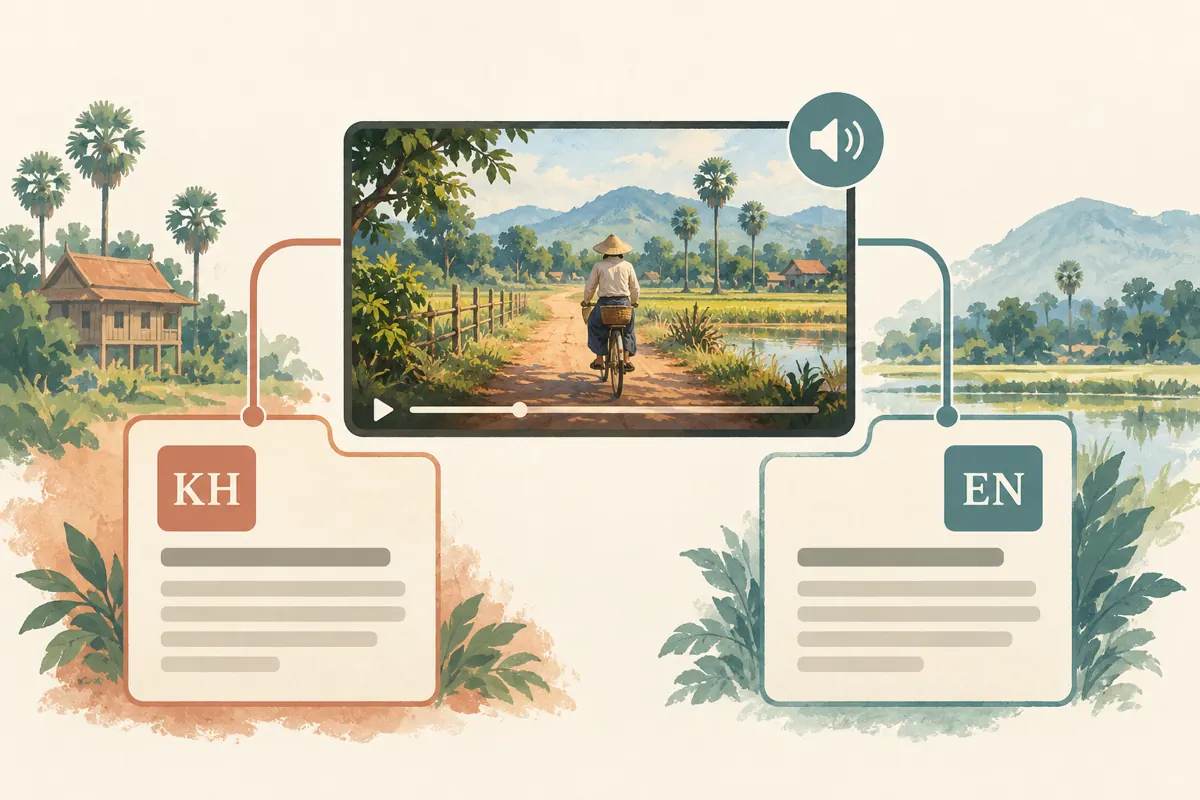
YouTube's official instructions place translated metadata inside the Subtitles area of YouTube Studio. Select the video, confirm its language if prompted, choose Add language, and select the translation language. Under Title and description, choose Add, enter the reviewed text, and publish. These steps add a language version to the existing video's information. They do not require uploading a second copy of the same footage.
Prepare the approved text before opening the editor so that publication does not become an improvised translation session. Keep the video URL beside the draft to prevent editing a similarly named upload. After saving, reopen the relevant language entry and compare it with the approved copy, especially the contact details and exclusions. Record which language versions were completed. If a version remains unfinished, leave it marked as pending in the team's notes rather than treating the whole video as ready for multilingual promotion.
6. Check the published experience on a phone
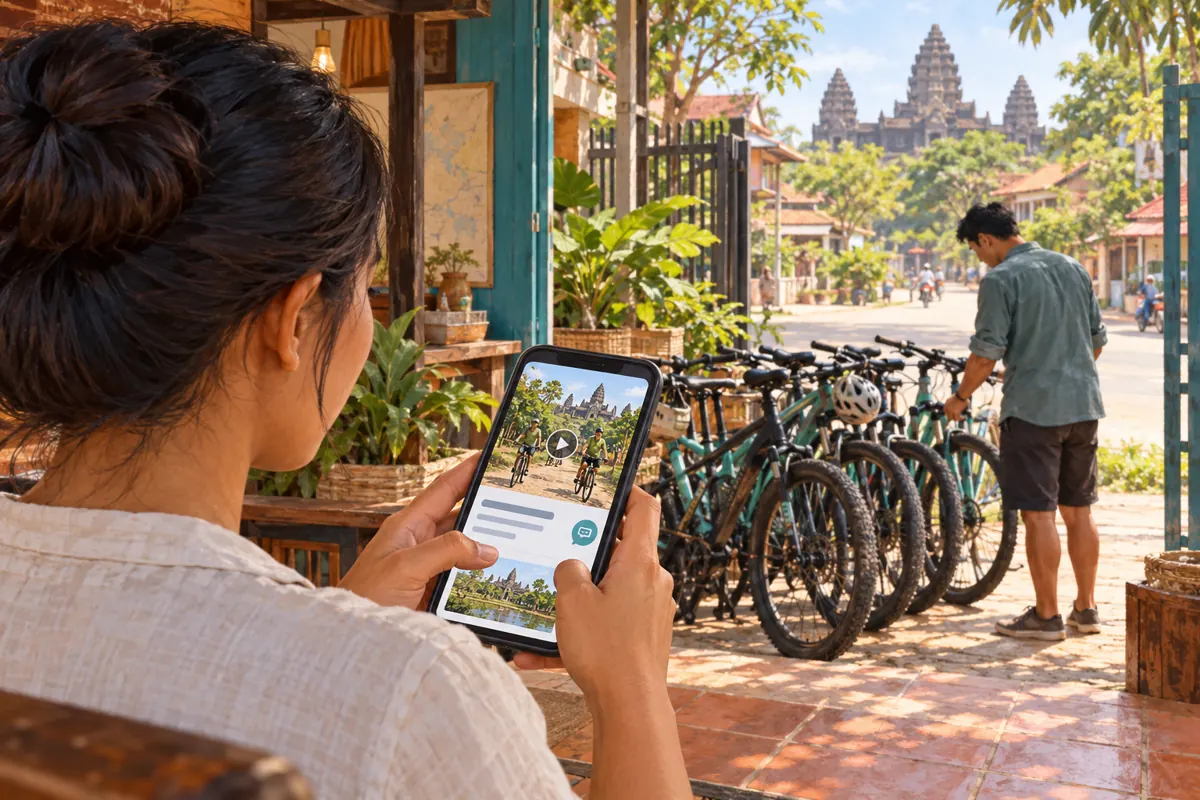
Review the public video as well as the saved editing fields. Ask a colleague to read the description on a phone, identify the meeting point and explain how they would enquire. Have them describe the expected tour language without prompting. If their answer differs from the fact sheet, revise the wording. This task-based review catches practical misunderstandings that spelling checks miss, such as interpreting “collection” as hotel pickup rather than collecting a bicycle at the shop.
YouTube's viewer guidance allows preferred languages for audio, titles and descriptions, separately from app language and location. Consequently, do not use a phone's interface language as your only test of what a viewer will see. Check the relevant viewing preferences and record the conditions of the test. Verify that both translations are saved correctly even if a particular viewing session displays the original. Avoid promising that every person in Cambodia will receive Khmer text or every overseas viewer will receive English.
7. Apply a separate decision to SMM-panel services
A translated title solves an information problem. Purchasing engagement does not perform that translation, verify the route or answer an enquiry. One supplied catalogue entry is “YouTube - Subscriber ~ Max 100k ~ 200/days ~ Instant ~ 𝗥𝗘𝗙𝗜𝗟𝗟 30D”. Its title presents it as a subscriber service, but the supplied description is empty. The wording does not establish its delivery method, subscriber authenticity, audience location or suitability for a Cambodian tour business. Treat the speed and refill wording as catalogue claims rather than verified outcomes.
Before spending, ask what the service actually does and whether its method complies with YouTube's rules. YouTube prohibits artificial increases in engagement metrics and warns that a hired promoter's actions can affect the channel. Decline artificial-engagement methods; an undocumented method is also insufficient grounds to proceed. Purchased engagement is not evidence of genuine interest, bookings, advertising delivery or Cambodian viewers. For this workflow, prioritise reviewed language versions and useful distribution through existing customer communications. A panel order is not a required final step.

8. Make the enquiry route match the translation
An English description creates an expectation that the next step is understandable in English. Check the linked booking information and the team's actual reply capacity before sharing the video widely. If the destination is available only in Khmer, explain how English-reading customers can ask for assistance. Do not advertise continuous bilingual support when a specific staff member handles those enquiries only during certain working periods. Set an accurate expectation using the business's confirmed arrangements.
Prepare a short enquiry prompt that requests only what is needed initially: preferred date, group size and the tour being discussed. Keep sensitive travel documents and payment details out of public comments. In the hypothetical example, the team can use the video to answer arrival questions, then confirm availability through its normal booking process. This gives promotion a practical destination. A viewer who understands the meeting instructions is better informed, but still needs an explicit booking confirmation before treating a place as reserved.
9. Avoid translation mistakes that change the offer
Watch for small words with large consequences. “Available” is different from “included”; “request” is different from “confirmed”; and “near the entrance” is less precise than a named meeting point. Machine translation can help produce a draft, but someone familiar with both languages and the tour must check these distinctions. Ask the reviewer to flag uncertain terms rather than silently choosing the most attractive interpretation. Retain qualifications about weather, access or guide availability wherever they materially affect the offer.
Another common mistake is putting both complete language versions into one crowded title. Separate language fields give the team a clearer place to maintain each version. Avoid adding lists of unrelated destinations to attract attention, especially places absent from the video or itinerary. Finally, do not update only the language you personally read. When the meeting point or booking method changes, review every published description against the revised fact sheet before continuing to circulate the video.
10. Review understanding before drawing marketing conclusions
Choose a review date and keep a simple record of recurring questions. Note whether people still ask where to meet, whether they misunderstand the tour language, and whether the enquiry route works. Record observations without converting them into unsupported success claims. A customer who says the video clarified bicycle fitting provides specific feedback about understanding; that statement alone does not establish how many bookings the translation generated.
If enquiries change after publication, consider other changes too: seasonal travel, a revised itinerary, a partner sharing the video or different staff response times. Avoid attributing everything to translated metadata. Keep any service-delivery records separate from this assessment. The next improvement should follow an identifiable problem. If viewers understand the meeting point but cannot understand the spoken briefing, work on reviewed captions. If they understand the video but cannot complete an enquiry, fix the contact process before increasing promotion.
Frequently asked questions
Do we need a second upload for the English title and description?
No. YouTube provides language entries for translated titles and descriptions on an existing video. Use those entries when the footage and underlying offer are the same. A separately produced English presentation may be useful for another purpose, but translating the metadata alone does not require duplicating the upload.
Will an English description make the guide's speech understandable in English?
No. The description can explain the subject and disclose the spoken language, but it does not translate the recording's audio. If understanding speech is necessary, plan reviewed captions or an appropriate translated presentation separately. Also state the actual language available during the tour so viewers do not infer bilingual guiding from bilingual promotional text.
Which language should a small Cambodian operator add first?
Start with a language appearing in genuine enquiries that the business can support accurately. Consider whether you have a reliable reviewer and someone able to answer follow-up questions. Completing one useful translation is more manageable than maintaining several versions whose booking details or qualifications the team cannot confidently check.
Can a subscriber service help prove that the translation worked?
No. A subscriber delivery record cannot establish that people understood a description, wanted the tour or made a booking. The supplied service title also does not verify how subscribers are obtained. Evaluate comprehension through specific customer questions and feedback, and assess any proposed promotion method against YouTube's fake-engagement rules before considering it.
What should we do when the meeting point changes?
Update the shared fact sheet, revise every published language version and check the linked arrival information. Review the footage too: if it prominently shows an obsolete location, a description edit may leave a misleading impression. Decide whether a clear correction is sufficient or whether the arrival video needs replacement before promoting it again.
Explore the current service catalogue, create an account, or ask a specific question through support tickets.
- YouTube Help: Translate your own video titles and descriptions
- YouTube Help: Change the language of your uploaded video
- YouTube Help: Watch videos in your preferred language
- YouTube Help: Fake engagement policy
Prepared with AI assistance. Illustrations explain the workflow and do not represent customer results.